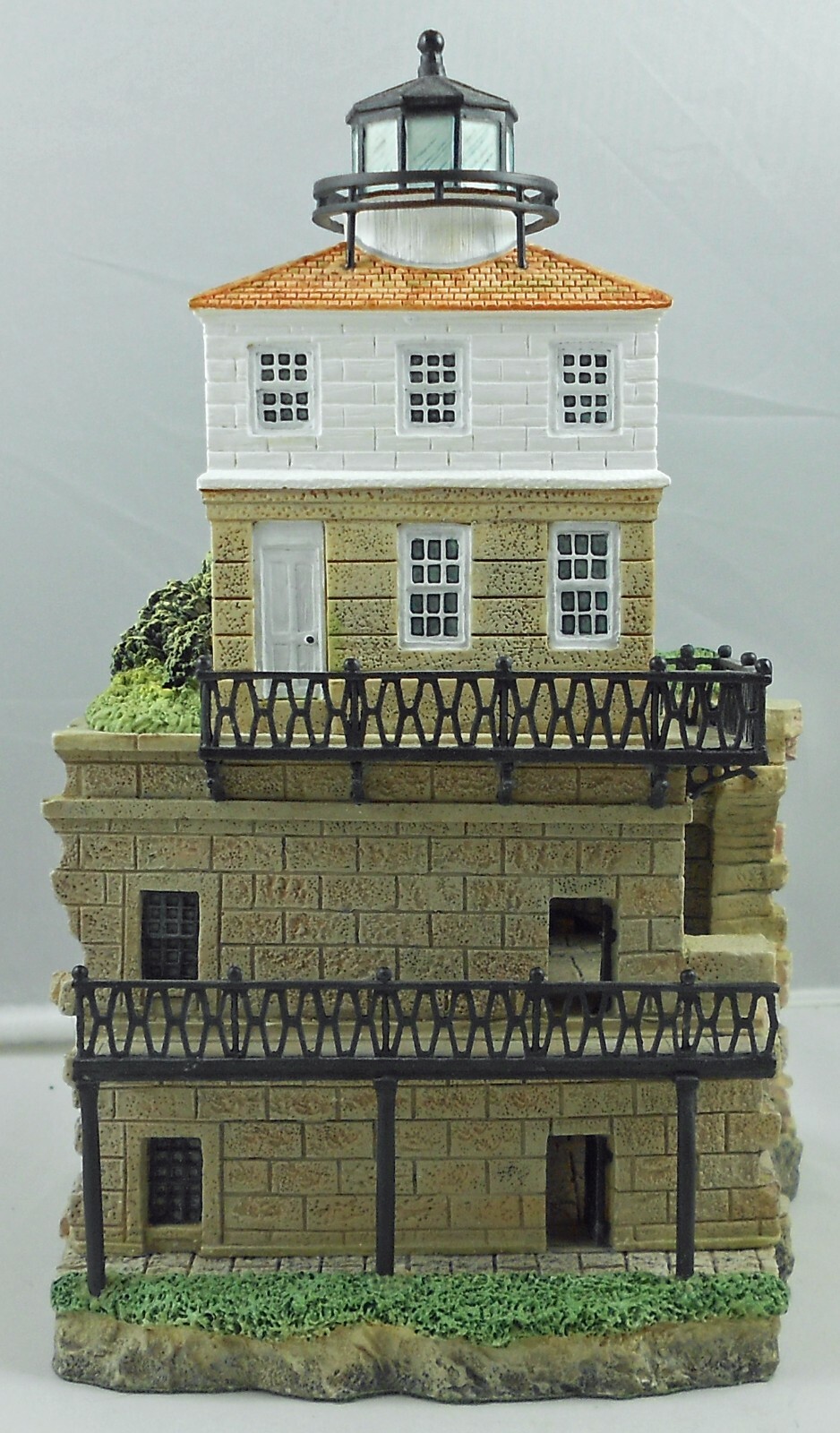
180 15% OFF Clark’s Point, MA, HL 284, #880/5,000, China, box (#6), C of A, TC

When you click on links to various merchants on this site and make a purchase, this can result in this site earning a commission. Affiliate programs and affiliations include, but are not limited to, the eBay Partner Network.

180 15% OFF Clark’s Point, MA, HL 284, #880/5,000, China, box (#6), C of A, TC:
$157.68
180 15% OFF!! Clark’s Point, MA, HL 284, #880 of 5,000, made in China, box (#6), Certificate of Authenticity, tent card
Each piece will be double boxed and packed for a 30' drop should that occur in handling. Shipper only insures first $50 valuation at no additional cost.PLEASE NOTE:I will only refund this amount ($50) if damage occurs unless buyer has purchased additional insurance.If buyer wishes additional insurance, the cost associated with additional insurance will be calculated and buyer will pay additional cost.Whale oil, a valuable resource in colonial America, was a much sought-after commodity in the New World. Fleets of whaling vessels flooded the Atlantic Ocean, looking to capitalize on the bounty of oceanic mammals that flourished in these waters. By 1850, New Bedford, MA was the whaling center of the world and its primary export, Sperm Whale Oil, was the lantern fuel of choice.
Even before the influx of ships, Clark’s Point was a prime candidate for a guiding beacon. Safe passage was needed for vessels entering the Bedford Harbor from Buzzards Bay; so local merchants built a simple wooden lighthouse in 1797. This primitive sentinel served until 1804, when the government commissioned the building of a 42' stone tower. Upon completion, the construction crew celebrated with a 100-gallon pot of chowder. The new beacon had a fixed white light at a focal plane of 50'.
The first person assigned to the station was Henry M. Smith, who built the keeper’s dwelling in 1842. He was a renowned wood carver who created elaborate figureheads for the ships of New Bedford.
One account of life at Clark’s Point tells of an African woman slave and her two children arriving by supply ship in the 1850s. According to local lore, the family was given refuge in New Bedford and the young boy, Charlie, became a well-known hack driver in the city.
The lighthouse was a success, but the economic decline of New Bedford came quickly. By 1860, the whale population had declined tragically, prompting inventors to find alternative fuel sources. Kerosene (coal oil) was discovered, overtaking the market when sperm oil skyrocketed to $2.55 a gallon. Even the Lighthouse Board felt the pinch, universally converting beacons to kerosene.
The 1860s also saw the construction of a fortress at Clark’s Point. A 7-sided, granite structure rose beside the lighthouse, eventually blocking the beacon’s view. So the lantern room was relocated to a beacon on the top of Fort Taber in 1869. In anticipation of the reverberating effects of cannon fire, architects designed an ingenious system to protect the light from concussion. But the system’s effectiveness was never proven, as the cannons were never fired.
Clark’s Point Light became obsolete in 1898 when Butler Flats Light was erected offshore. The abandoned lighthouse and fortress deteriorated when vandalism and neglect took over. Then, in the 1990s, the City of New Bedford unveiled an ambitious plan to restore historic lighthouses. Their first two projects were at Butler Flats Light and Palmer Island Light. Clark’s Point received its much-needed attention in the winter months of 2000-2001. City crews rebuilt the upper portion of the lighthouse. Then, on June 15, 2001 (on the 132nd anniversary of the lighthouse’s first illumination), the sentinel was relighted under the fanfare of fireworks, cannon blasts, and the “1812 Overture.” The Fort Taber Historical Association plans to establish a military museum and restore the grounds.
Harbour Lights sculpture depicts Clark’s Point atop the rustic fort, with a crosscut view inside the interior of the walls. Hidden inside are remnants of military occupancy–maps, supplies stored in crates, and a wooden chest, a bunk bed, and torches to illuminate the dark hallways.
Wikipedia update (May, 2021): The Clark’s Point Light is located in New Bedford, Massachusetts. Originally constructed as a wooden tower, it was replaced with a stone tower in 1804. This in turn was replaced by a structure on the parapets of Fort Rodman which was deactivated in 1898. After restoration in the early 1970s, it was relit again in 2001 by the city as a private aid.
The first light at this location was erected in 1797 by a group of local merchants, New Bedford at the time being a center of the whaling industry. This tower, constructed of wood, lasted only a year before it was destroyed in a fire; its successor was also privately erected, but was turned over to the federal government in 1800, having been lit the previous year. This tower lasted somewhat longer, apparently destroyed by lightning in 1803. The following year a 38' (12 m) stone tower was erected; this was rebuilt somewhat in 1818, increasing the height of the tower. Various upgrades to the tower were performed over the years including new lamps and an octagonal lantern. There was no keeper's dwelling at the site until 1842.
Starting in 1857, construction on Fort Taber (also known as Fort Rodman) begin adjacent to the lighthouse. The fort became obsolete following the civil war, and construction was finally halted in 1871, though the stone superstructure was essentially complete by the end of the war. The walls were found to obscure the lighthouse beacon from some quarters, and therefore a new lighthouse was built on the fort itself. This was a small wooden structure with the lantern set on its hipped roof. Special swinging frames were provided for the lantern to minimize the risk of damage when the fort's cannons were fired, but these were never put to the test. The old tower was abandoned and was eventually demolished in 1906. By that time the Butler Flats Light had been established next to the shipping channel, and the light on the fort was rendered obsolete; the Clark’s Point keeper was transferred to the new light in 1898, and the old light was extinguished
It remained perched on the fort, however, and in the early 1970s it was restored along with the remains of the fort. Nonetheless it was badly damaged by vandals. In the late 1990s the city restored the area around the fort as a park, and in 2001 the lighthouse was rebuilt and relit, along with two other lighthouses. It continues in operation as a private aid to navigation.
MEASUREMENTS: L = 4½” x W = 4” x H = 7”
CONDITION: Very good. Displayed for a short time in glass-enclosed curio cabinet.
Each piece will be double boxed and packed for a 30' drop should that occur in handling. Shipper only insures first $50 valuation at no additional cost.PLEASE NOTE:I will only refund this amount ($50) if damage occurs unless buyer has purchased additional insurance.If buyer wishes additional insurance, the cost associated with additional insurance will be calculated and buyer will pay additional cost.
If damaged in shipping, buyer must save damaged carton to show shipper’s rep condition of boxes.
NOTE: for the most part, I only collected full size Harbour Lights. GLOWS and Little Lights of Mine will be clearly identified as such should I find I have any.
180 15% OFF Clark’s Point, MA, HL 284, #880/5,000, China, box (#6), C of A, TC:
$157.68
Related Items:
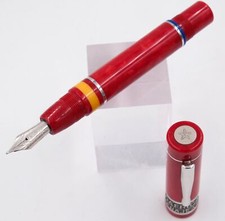
Delta South Africa Fountain Pen Nib M - 15cm - Limited Edition 180/210
$1673.88

CONAN THE BARBARIAN RAGE OF THE UN DYING PREMIUM FORMAT FIGURE EXCLUSIVE 180/200
$1300.00
Haunted Living 15-ft Talking Lighted Skeleton Watcher Motion Activated Animatron
$780.99