16 1941 Lou Nova Boxer Boxing Cosmic Punch Actor Old famous Photorapher Negative


When you click on links to various merchants on this site and make a purchase, this can result in this site earning a commission. Affiliate programs and affiliations include, but are not limited to, the eBay Partner Network.

16 1941 Lou Nova Boxer Boxing Cosmic Punch Actor Old famous Photorapher Negative:
$14240.06
16 vintage original 4X5 INCH NEGATIVEs OF LOUS NOVA BY FAMED PHOTOGRAPHER MORRIS ENGEL
Guaranteed authentic 4x5 original negative as shown. This negative is from the PM New York City Daily News between 1940 – 1948.
Lou Nova also called Cosmic punch was an American boxer and actor. Born in Los Angeles, California, the 6 ft 3+1⁄2 in Nova was the U.S. and World Amateur Boxing Champion in 1935. After turning pro, he remained undefeated in his first 22 matches, and won 40 fights in total.Morris Engel was an American photographer, cinematographer and filmmaker best known for making the first good-quality, internationally-recognized American film "independent" of Hollywood studios, Little Fugitive, in collaboration with his wife, photographer Ruth Orkin, and their friend, writer Raymond Abrashkin
Lou Nova (March 16, 1913 – September 29, 1991) also called Cosmic punch was an American boxer and actor. Born in Los Angeles, California, the 6 ft 3+1⁄2 in (1.92 m) Nova was the U.S. and World Amateur Boxing Champion in 1935. After turning pro, he remained undefeated in his first 22 matches, and won 40 fights in total. He was the first top rated boxer to practice yoga, and reportedly did headstands in the dressing room before his title bout with Joe Louis.
Boxing careerIn 1938, Nova gained an upset win over Britain's Tommy Farr in a 15-round decision. Nova had Farr near a knockout in the 14th round when Referee Eddie Josephs started counting as he lay in the ropes. However, Farr resumed the fight after the count reached two. Both men were in a state of exhaustion in the last round. This fight put Nova on the American boxing map as a potential heavyweight title contender.
He went on to defeat Max Baer in the first televised heavyweight prizefight June 1, 1939, on WNBT-TV in New York. The left side of Baer's face was battered out of shape after ten rounds of the most excruciating fighting he had ever undergone, and was bleeding so severely from a severe laceration of the lower lip he could hardly breathe when the referee stopped the bout. Nova beat Baer again in 1941, although Nova was knocked down for a brief one count in the 4th from a Baer right hand. Baer was subsequently knocked down by a right for a nine count. After he got up he was knocked down again by a right hand. Referee Donovan stopped the bout when the count was at two.
Nova was injured badly in a fight with Tony Galento and was treated at a hospital, almost losing an eye.
On September 29, 1941 he fought Joe Louis for the heavyweight title. Nova was knocked down once in the 6th round. Nova made a poor showing. According to Nat Fleischer (The Ring, December 1941, page 4) he didn't win a round and took a terrible beating in the sixth round. The end was somewhat controversial because the fight was stopped with just one second left in the round when Nova arose unsteadily from the knockdown.
Nova went on to box four more years, losing bouts to Lee Savold, Tami Mauriello, Lee Oma, and Joe Baksi.
Acting careerAfter leaving the fight ring, he became an actor. His motion picture debut was as Kid Mandell in MGM's Swing Fever (1943) starring Kay Kyser and Marilyn Maxwell. Other movie roles include that as Hubert in the 20th Century Fox film noir crime drama Somewhere in the Night (1946) starring John Hodiak, and a cameo in Joe Palooka, Champ the same year.
Nova acted in over 20 movies, including What a Way to Go! (1964) and Blackbeard's Ghost (1968). He appeared in two stage roles, Big Jule in Guys and Dolls (1955), which ran for 16 performances, and O'Malley in the Broadway play The Happiest Millionaire (1956) starring Walter Pidgeon, which ran for 271 performances, in which Nova performed the popular baseball poem Casey at the Bat. Nova's guest spots on TV include Space Patrol, Hopalong Cassidy, General Electric Theater, 77 Sunset Strip, Shotgun Slade and Get Smart.
YogaNova was a practitioner of yoga and was trained by Pierre Bernard.[1][2] In 1939, Nova trained for his fight with Max Baer at Bernard's estate in Nyack, New York.[3] Nova claimed to have developed a "cosmic punch", based from his yoga training. The cosmic punch was mocked by Joe Louis who commented that he only received an "Earth Punch" from Nova.[4][5]
Biographer Richard Bak has noted that "Nova was a student of Far Eastern metaphysics, including yoga, the Hindu theistic philosophy that teaches the suppression of all activity of mind, body, and will in order to liberate the spiritual self."[6] Nova was a vegetarian.[7]
RetirementHe was inducted into World Boxing Hall of Fame in 1991, and into the Sacramento City College Athletic Hall of Fame in 1999.
Lou Nova died from cancer[8] at age 78 in Sacramento, California.
Referencesbohemians until the American Civil War began in 1861.[7] This group gathered at a German bar on Broadway called Pfaff's beer cellar.[8] Members included their leader Henry Clapp Jr., Ada Clare, Walt Whitman, Fitz Hugh Ludlow, and actress Adah Isaacs Menken.[8]
Similar groups in other cities were broken up as well by the Civil War and reporters spread out to report on the conflict. During the war, correspondents began to assume the title bohemian, and newspapermen in general took up the moniker. Bohemian became synonymous with newspaper writer.[7] In 1866, war correspondent Junius Henri Browne, who wrote for the New York Tribune and Harper's Magazine, described bohemian journalists such as he was, as well as the few carefree women and lighthearted men he encountered during the war years.[9]
San Francisco journalist Bret Harte first wrote as "The Bohemian" in The Golden Era in 1861, with this persona taking part in many satirical doings, the lot published in his book Bohemian Papers in 1867. Harte wrote, "Bohemia has never been located geographically, but any clear day when the sun is going down, if you mount Telegraph Hill, you shall see its pleasant valleys and cloud-capped hills glittering in the West ..."[10]
Mark Twain included himself and Charles Warren Stoddard in the bohemian category in 1867.[7] By 1872, when a group of journalists and artists who gathered regularly for cultural pursuits in San Francisco were casting about for a name, the term bohemian became the main choice, and the Bohemian Club was born.[11] Club members who were established and successful, pillars of their community, respectable family men, redefined their own form of bohemianism to include people like them who were bons vivants, sportsmen, and appreciators of the fine arts.[10] Club member and poet George Sterling responded to this redefinition:
Any good mixer of convivial habits considers he has a right to be called a bohemian. But that is not a valid claim. There are two elements, at least, that are essential to Bohemianism. The first is devotion or addiction to one or more of the Seven Arts; the other is poverty. Other factors suggest themselves: for instance, I like to think of my Bohemians as young, as radical in their outlook on art and life; as unconventional, and, though this is debatable, as dwellers in a city large enough to have the somewhat cruel atmosphere of all great cities.
— Parry, 2005[12])Despite his views, Sterling associated with the Bohemian Club, and caroused with artist and industrialist alike at the Bohemian Grove.[12]
Canadian composer Oscar Ferdinand Telgmann and poet George Frederick Cameron wrote the song "The Bohemian" in the 1889 opera Leo, the Royal Cadet.[13]
The impish American writer and Bohemian Club member Gelett Burgess, who coined the word blurb, supplied this description of the amorphous place called Bohemia:Gelett Burgess drew this fanciful "Map of Bohemia" for The Lark, March 1, 1896 (see also The Winter's Tale § The seacoast of Bohemia)To take the world as one finds it, the bad with the good, making the best of the present moment—to laugh at Fortune alike whether she be generous or unkind—to spend freely when one has money, and to hope gaily when one has none—to fleet the time carelessly, living for love and art—this is the temper and spirit of the modern Bohemian in his outward and visible aspect. It is a light and graceful philosophy, but it is the Gospel of the Moment, this exoteric phase of the Bohemian religion; and if, in some noble natures, it rises to a bold simplicity and naturalness, it may also lend its butterfly precepts to some very pretty vices and lovable faults, for in Bohemia one may find almost every sin save that of Hypocrisy. ...
His faults are more commonly those of self-indulgence, thoughtlessness, vanity and procrastination, and these usually go hand-in-hand with generosity, love and charity; for it is not enough to be one's self in Bohemia, one must allow others to be themselves, as well. ...
What, then, is it that makes this mystical empire of Bohemia unique, and what is the charm of its mental fairyland? It is this: there are no roads in all Bohemia! One must choose and find one's own path, be one's own self, live one's own life.
— Ayloh, 1902[14])In New York City, the pianist Rafael Joseffy formed an organization of musicians in 1907 with friends, such as Rubin Goldmark, called "The Bohemians (New York Musicians' Club)".[15] Near Times Square, Joel Rinaldo presided over "Joel's Bohemian Refreshery", where the Bohemian crowd gathered from before the turn of the 20th century until Prohibition began to bite.[16][17][18][19] Jonathan Larson's musical Rent, and specifically the song "La Vie Boheme", portrayed the postmodern Bohemian culture of New York in the late 20th century.
In May 2014, a story on NPR suggested, after a century and a half, some Bohemian ideal of living in poverty for the sake of art had fallen in popularity among the latest generation of American artists. In the feature, a recent graduate of the Rhode Island School of Design related "her classmates showed little interest in living in garrets and eating ramen noodles."[20]
People
An illustration from Henri Murger's 1899 book Bohemian Life.The term has become associated with various artistic or academic communities and is used as a generalized adjective describing such people, environs, or situations: bohemian (boho—informal) is defined in The American College Dictionary as "a person with artistic or intellectual tendencies, who lives and acts with no regard for conventional rules of behavior".
Many prominent European and American figures of the 19th and 20th centuries belonged to the bohemian subculture, and any comprehensive "list of bohemians" would be tediously long. Bohemianism has been approved of by some bourgeois writers such as Honoré de Balzac,[citation needed] but most conservative cultural critics do not condone bohemian lifestyles.[citation needed]
In Bohemian Manifesto: a Field Guide to Living on the Edge, author Laren Stover breaks down the bohemian into five distinct mind-sets or styles, as follows:
Beat: also drifters, but non-materialist and art-focusedDandy: no money, but try to appear as if they have it by buying and displaying expensive or rare items – such as brands of alcohol[21]Gypsy: the expatriate types, they create their own Gypsy ideal of nirvana wherever they goNouveau: bohemians that are rich who attempt to join traditional bohemianism with contemporary cultureZen: "post-beat", focus on spirituality rather than artAimée Crocker, an American world traveler, adventuress, heiress, and mystic, was dubbed the "queen of Bohemia" in the 1910s by the world press for living an uninhibited, sexually liberated, and aggressively non-conformist life in San Francisco, New York, and Paris. She spent the bulk of her fortune inherited from her father Edwin B. Crocker, a railroad tycoon and art collector, on traveling all over the world (lingering the longest in Hawaii, India, Japan, and China) and partying with famous artists of her time such as Oscar Wilde, Robert Louis Stevenson, Mark Twain, the Barrymores, Enrico Caruso, Isadora Duncan, Henri Matisse, Auguste Rodin, and Rudolph Valentino. Crocker had countless affairs and married five times in five different decades of her life, each man being in his twenties. She was famous for her tattoos and pet snakes and was reported to have started the first Buddhist colony in Manhattan. Spiritually inquisitive, Crocker had a ten-year affair with occultist Aleister Crowley and was a devoted student of Hatha Yoga.[citation needed]
Maxwell Bodenheim, an American poet and novelist, was known as the king of Greenwich Village Bohemians during the 1920s and his writing brought him international fame during the Jazz Age.Former brewery turned artist center in Prenzlauer BergIn the 20th-century United States, the bohemian impulse was famously seen in the 1940s hipsters, the 1950s Beat generation (exemplified by writers such as William S. Burroughs, Allen Ginsberg, Jack Kerouac, and Lawrence Ferlinghetti), the much more widespread 1960s counterculture, and 1960s and 1970s hippies.
Rainbow Gatherings may be seen as another contemporary worldwide expression of the bohemian impulse.[22] An American example is Burning Man, an annual participatory arts festival held in the Nevada desert.
In 2001, political and cultural commentator David Brooks contended that much of the cultural ethos of well-to-do middle-class Americans is Bohemian-derived, coining the oxymoron "Bourgeois Bohemians" or "Bobos".[23] A similar term in Germany is Bionade-Biedermeier, a 2007 German neologism combining Bionade (a trendy lemonade brand) and Biedermeier (an era of introspective Central European culture between 1815 and 1848). The coinage was introduced in 2007 by Henning Sußebach, a German journalist, in an article that appeared in Zeitmagazin concerning Berlin's Prenzlauer Berg lifestyle.[24] The hyphenated term gained traction and has been quoted and referred to since. A German ARD TV broadcaster used the title Boheme and Biedermeier in a 2009 documentary about Berlin's Prenzlauer Berg.[25] The main focus was on protagonists, that contributed to the image of a paradise for the (organic and child-raising) well-to-do, depicting cafés where "Bionade-Biedermeier sips from Fair-Trade".[25]
See alsoRelated termsArt colonyAvant-gardeBohemian ClubBohemian RhapsodyBohemian of the 1960sGentrificationHistory of modern Western livingSlummingSpiral of silenceRelated cultures or movementsBeat GenerationBeatnikBloomsbury GroupCrustiesDandyDiggersFolk cultureFreetown ChristianiaFreighthoppingGothGutter punkHippieHipster (1940s subculture)Hipster (contemporary subculture)LibertineMerry PrankstersNomadsPre-Raphaelite BrotherhoodPunkSydney PushMorris Engel (April 8, 1918 – March 5, 2005) was an American photographer, cinematographer and filmmaker best known for making the first good-quality, internationally-recognized American film "independent" of Hollywood studios, Little Fugitive (1953), in collaboration with his wife, photographer Ruth Orkin, and their friend, writer Raymond Abrashkin.
Engel was a pioneer in the use of hand-held cameras that he helped design throughout his features and in using nonprofessional actors in American films, following the example of Italian Neo-realism. His naturalistic films influenced future prominent independent and French New Wave filmmakers.[1]
CareerA lifelong New Yorker, Morris Engel was born in Brooklyn in 1918. After joining the Photo League in 1936, Engel had his first exhibition in 1939, at the New School for Social Research.[2] He worked briefly as a photographer for the Leftist newspaper PM[2] before joining the United States Navy as a combat photographer from 1941 to 1946 in World War II.[2] After the war, he returned to New York where he again was an active Photo League member, teaching workshop classes and serving as co-chair of a project group focusing on postwar labor issues.[3] He was also an active photo-journalist working for Fortune, Collier's and McCalls, among others.[2]
In 1939 he was asked by his friend Paul Strand to shoot some motion picture film for his film Native Land using the compact 35mm Bell and Howell Eyemo holding 100 foot rolls that could film about one minute of film. But he was disappointed that Strand put this camera designed for hand-holding on a heavy metal baseplate attached to a heavy wooden tripod.[4]
During the war he was a still photographer but he probably was familiar with a handheld 35 mm battery-operated camera developed during the war for combat photography, the Cunningham Combat Camera. The large square camera was mounted a rifle stock, held tightly to the cameraman’s chest by handles mounted on each side, and aimed in the general direction of the action, sighted by a top-mounted viewfinder. With a two hundred foot magazine, it could run for two minutes. The other primary motion picture camera used by the military was the Bell and Howell Eyemo, a spring-run camera held to the eye with a 20 second running time.[5]
After the war, Engel and an engineer he met in the service, Charles Woodruff, reconfigured the Cunningham camera into a much smaller camera for civilian purposes. Engel explained, "Designed for me, it was a compact 35mm, hand held, shoulder cradled, [with] double registration pins and twin lens finder and optical system."[6] It used the Cunningham 35mm 200 foot interchangeable magazines which met the camera at the film gate with the lens, motor, shutter, and viewfinder comprising the camera body. Twin lens geared together enabled the viewfinder lens and the camera to be focused together, as on Engel's preferred still camera, the Rolleiflex. Like the Rolleiflex, the viewfinder was viewed from above. Held against the waist, rather than in front of the face, the camera was both steadier and less conspicuous than the Eyemo. "With a simple shoulder belt support," Engel said, "I was armed with a camera which became the heart of the esthetic and mobile approach to the film [the Little Fugitive].[7] This camera was about the same size as the Eyemo, but looked like a giant Ocarina with the camera in the wide part at the top and the smaller curved part below.[8]
In 1950, Engel tried to sell a March of Time imitation called How America Lives filmed with his new camera to distributors but found no takers.[9]Richie Andrusco in Little FugitiveSince he couldn’t sell proposed short subjects, he decided to make a feature. In 1953, Engel, along with his girlfriend, fellow photographer Ruth Orkin, and his former colleague at PM, Raymond Abrashkin, made the feature film Little Fugitive for $80,000, shooting the film on location in Coney Island with the hand-held 35 millimeter camera Engel and his friend had designed. This camera was compact and lightweight so it would be unobtrusive shooting in public. As such, it did not allow simultaneous sound recording; the sound was dubbed later. The film, one of the first successful American "independent films", earned them an Academy Award nomination for Best Writing, Motion Picture Story and a Silver Lion at the Venice Film Festival. The film told the story of a seven-year-old boy, played by Richie Andrusco, who runs away from home and spends the day at Coney Island. Andrusco never appeared in another film, and the other performers were mainly nonprofessionals.A scene from Lovers and LollipopsThough their first film was a critical success,[10] Engel and Orkin, who had since married, had a hard time finding funding [10] for their next film, Lovers and Lollipops, which was completed in 1956. The film was about a widowed mother dating an old friend, and how her young daughter complicates their budding relationship. Like the first one, Lovers and Lollipops was filmed with a hand-held compact 35 mm camera, with sound dubbed in post-production.
This was followed two years later by the more adult-centered Weddings and Babies, a film about an aspiring photographer than is often seen as autobiographical. This was Engel's first film to have live sound recorded at the time of filming, and is historically the first 35 mm fiction film made with a portable camera equipped for synchronized sound.[11]
In 1961, Engel directed three television commercials, including an award-winning one for Oreo cookies. The other two were for Ivory soap and Fab detergent.[12] A half-hour short film The Dog Lover was made the following year, a comedy about a shop merchant whose life is turned upside down by the stray dog his kid brings home.[12]
He made a fourth feature in 1968[2] called I Need a Ride to California, which followed a group of young hippies in Greenwich Village. Post-production was shelved until 1972 when it was finally completed, but for unknown reasons it was never released during his lifetime. It finally received its premiere in October 2019 at New York's Museum of Modern Art (MoMA); it was first released on home video in March 2021.[12]
In the 1980s, Engel began taking panoramic photographs on the streets of New York City.[12] Engel and Ruth Orkin remained married until Orkin's death in 1985. In the 1990s, he returned to filmmaking, this time working on video. He completed two feature-length documentaries: A Little Bit Pregnant[12] in 1994 and Camellia[12] in 1998, each revolving around a different child in the Hartman family. First, in A Little Bit Pregnant Engel focused on the 8-year-old Leon's reactions, anxiety and wonderment to the impending birth of his baby sister Camellia. For the second film, two years later Engel returned to the same family, who gave him a year of access to the now 2-year-old daughter Camellia, capturing her daily life and routines, and her relationships with her family and others. Both films were shown in private screenings, but never had a public release due likely to the Hartman family presumably holding the rights.[12][13]
Engel died of cancer in 2005.
LegacyEngel and Orkin's work occupy a pivotal position in the independent and art film scene of the 1950s, and was influential on John Cassavetes, Martin Scorsese, Jim Jarmusch, Quentin Tarantino, and François Truffaut,[1][10][14] and was frequently cited as an example by the influential film theorist Siegfried Kracauer.[15]
Writing in Cassavetes on Cassavetes, biographer Raymond Carney says that Cassavetes was familiar with the work of the New York-based independent filmmakers who preceded him, and was "particularly fond" of Engel's three films from the 1950s. Carney writes that "Commentators who regard [Cassavetes] as the 'first independent' are only displaying their ignorance of the history of independent American film, which goes back to the early 1950s."[16]
Truffaut was inspired by Little Fugitive's spontaneous production style when he created The 400 Blows (1959), saying long afterwards: “Our New Wave would never have come into being if it hadn’t been for the young American Morris Engel, who showed us the way to independent production with [this] fine movie.”[17]
Filmography (complete)The Farm They Won (1951 short documentary film)The Little Fugitive (1953 feature film)Lovers and Lollipops (1956 feature film)Weddings and Babies (1958 feature film)One Chase Manhattan Plaza (1961 short documentary film)The Dog Lover (1962 short film)Little Girls Have Pretty Curls (1962 short documentary film)I Need a Ride to California (1968 feature film) (released in 2019)Peace Is (1968 short documentary film)A Little Bit Pregnant (1994 feature documentary video)Camellia (1998 feature documentary video)Morris Engel Home Movies (various dates, short documentary) (released in 2021)Exhibitions (selection)November 4, 2011 – March 25, 2012 "The Radical Camera: New York's Photo League, 1936–1951" at The Jewish Museum, New YorkAugust 20 – August 29, 2005 Morris Engel's Weddings and Babies: Newly Preserved at Museum of Modern Art, New YorkReferences
A photographer (the Greek φῶς (phos), meaning "light", and γραφή (graphê), meaning "drawing, writing", together meaning "drawing with light")[1] is a person who makes photographs.
Duties and types of photographers
An English photographer in his studio, in the 1850s.As in other arts, the definitions of amateur and professional are not entirely categorical.Epifania de Guadalupe Vallejo, the earliest known photographer active in what is the present-day West Coast of the United States.[2]An amateur photographer takes snapshots for pleasure to remember events, places or friends with no intention of selling the images to others.
A professional photographer is likely to take photographs for a session and image purchase fee, by salary or through the display, resale or use of those photographs.[3]
A professional photographer may be an employee, for example of a newspaper, or may contract to cover a particular planned event such as a wedding or graduation, or to illustrate an advertisement. Others, like fine art photographers, are freelancers, first making an image and then licensing or making printed copies of it for sale or display. Some workers, such as crime scene photographers, estate agents, journalists and scientists, make photographs as part of other work. Photographers who produce moving rather than still pictures are often called cinematographers, videographers or camera operators, depending on the commercial context.
The term professional may also imply preparation, for example, by academic study or apprenticeship by the photographer in pursuit of photographic skills. A hallmark of a professional is often that they invest in continuing education through associations. While there is no compulsory registration requirement for professional photographer status, operating a business requires having a business license in most cities and counties. Similarly, having commercial insurance is required by most venues if photographing a wedding or a public event. Photographers who operate a legitimate business can provide these items.
Photographers can be categorized based on the subjects they photograph.
Some photographers explore subjects typical of paintings such as landscape, still life, and portraiture. Other photographers specialize in subjects unique to photography, including sports photography, street photography, documentary photography, fashion photography, wedding photography, war photography, photojournalism, aviation photography and commercial photography. The type of work commissioned will have pricing associated with the image's usage.
PhotographersA group photographing retired footballer Franz Beckenbauer.A group photographing retired footballer Franz Beckenbauer.
Nature photographer Urmas Tartes working on an outdoor Environment.Nature photographer Urmas Tartes working on an outdoor Environment.
A photographer (Douglas Osheroff) setting up a shot with the aid of a tripod.A photographer (Douglas Osheroff) setting up a shot with the aid of a tripod.
Photographing a model. An assistant is holding a reflector.Photographing a model. An assistant is holding a reflector.
Sports photographer during 2019 Pocono 400Sports photographer during 2019 Pocono 400
Sanctioned motorsport photographers identified by individually numbered white bibs on a road-course in the Isle of Man with public spectator area behind.Sanctioned motorsport photographers identified by individually numbered white bibs on a road-course in the Isle of Man with public spectator area behind.
A photographer and his large format camera 1985.A photographer and his large format camera 1985.
Selling photographsFurther information: Photography and the law
A U.S. Navy photographer in March 2004.The exclusive right of photographers to copy and use their products is protected by copyright. Countless industries purchase photographs for use in publications and on products. The photographs seen on magazine covers, in television advertising, on greeting cards or calendars, on websites, or on products and packages, have generally been purchased for this use, either directly from the photographer or through an agency that represents the photographer. A photographer uses a contract to sell the "license" or use of their photograph with exact controls regarding how often the photograph will be used, in what territory it will be used (for example U.S. or U.K. or other), and exactly for which products. This is usually referred to as usage fee and is used to distinguish from production fees (payment for the actual creation of a photograph or photographs). An additional contract and royalty would apply for each additional use of the photograph.
The contract may be for only one year, or other duration. The photographer usually charges a royalty as well as a one-time fee, depending on the terms of the contract. The contract may be for non-exclusive use of the photograph (meaning the photographer can sell the same photograph for more than one use during the same year) or for exclusive use of the photograph (i.e. only that company may use the photograph during the term). The contract can also stipulate that the photographer is entitled to audit the company for determination of royalty payments. Royalties vary depending on the industry buying the photograph and the use, for example, royalties for a photograph used on a poster or in television advertising may be higher than for use on a limited run of brochures. A royalty is also often based on the size at which the photo will be used in a magazine or book, and cover photos usually command higher fees than photos used elsewhere in a book or magazine.
Photos taken by a photographer while working on assignment are often work for hire belonging to the company or publication unless stipulated otherwise by contract. Professional portrait and wedding photographers often stipulate by contract that they retain the copyright of their photos, so that only they can sell further prints of the photographs to the consumer, rather than the customer reproducing the photos by other means. If the customer wishes to be able to reproduce the photos themselves, they may discuss an alternative contract with the photographer in advance before the pictures are taken, in which a larger upfront fee may be paid in exchange for reprint rights passing to the customer.
There are major companies who have maintained catalogues of stock photography and images for decades, such as Getty Images and others. Since the turn of the 21st century many online stock photography catalogues have appeared that invite photographers to sell their photos online easily and quickly, but often for very little money, without a royalty, and without control over the use of the photo, the market it will be used in, the products it will be used on, time duration, etc. These online stock photography catalogues have drastically changed the landscape of the industry, presenting both opportunities and challenges for photographers seeking to earn a living through their craft.
Commercial photographers may also promote their work to advertising and editorial art buyers via printed and online marketing vehicles. In today's digital age, social media has become an increasingly popular tool for commercial photographers to showcase their work and build their professional network, allowing them to reach a wider audience and connect with potential clients around the world.
Photo sharingMany people upload their photographs to social networking websites and other websites, in order to share them with a particular group or with the general public.[4] Those interested in legal precision may explicitly release them to the public domain or under a free content license. Some sites, including Wikimedia Commons, are punctilious about licenses and only accept pictures with clear information about permitted use.
See also
In 1938, Jerry Siegel and Joe Shuster, two working class Jewish adolescents, created an“interplanetary immigrant” who was dedicated to making the world better.2 This involved beinga champion of the underdog and in order to accomplish his tasks, they endowed him withsuperhuman powers of strength and perception. This hero, “Superman,” was the most enduringof many champions in the popular culture of the 1930s. His cover identity was that of a meek,mildly mannered newspaper reporter at a metropolitan daily who possessed the ability totransform himself at a moment’s notice whenever he was needed to further the cause of justice.Such heroes appeared across different media, on radio shows as well as in comic books and pulpfiction. As this super-hero was entering public awareness and photography was gainingdominance as a way to convey news of the world, a new photography driven newspaper was
1 Roy Hoopes. Ralph Ingersoll: A Biography. New York: Atheneum, 1985, p. 404.2 The character of Superman was originally introduced in 1933 in an illustrated short story; however, thefamiliar heroic Superman first appeared in Action Comics No. 1 in June 1938 when the superhero wasassociated with the slogan “Champion of the Oppressed.” In 1940, at approximately the time of PM’sdebut, The Adventures of Superman became a popular radio program. On that show he was granted theability to fly and the original slogan was dropped in favor of “Truth, Justice, and the American Way.”This trajectory paralleled what was happening on the pages of PM and eventually, the country, as concernfor the downtrodden and ethnic identity gave way to creation of an American identity, celebration ofdemocracy and an all out effort to win the war. See Charles Moss, “Superman’s Dark Past”, The Atlantic,accessed 3/162being born in New York City, the real Gotham. The daily newspaper PM, which ran from June1940 through 1948, was created from within the heart of the publishing empire of Henry Luce.The idea for the new paper was the brainchild of Ralph McAllister Ingersoll, an experiencedpublishing world insider who took the wildly successful formula of the mid-1930s weekly photomagazines, such as Luce’s Life, and translated it into a daily paper. His new publication wasintended to represent political views that emphasized a sense of justice and advocated for socialimprovement for the dispossessed. The “Superman” phenomenon was a perfect metaphor forPM, which proclaimed its purpose as a crusading newspaper. In an early prospectus for PM,Ralph Ingersoll stated,We are against people who push other people around, just for the fun of pushing, whetherthey flourish in this country or abroad. We are against fraud and deceit and greed andcruelty and we will seek to expose their practitioners. We are for people who are kindlyand courageous and honest. We respect intelligence, sound accomplishment, openmindedness, religious tolerance. We do not believe all mankind’s problems are now beingsolved successfully by any existing social order, certainly not our own, and we propose tocrusade for those who seek constructively to improve the way men live together. We areAmericans and we prefer democracy to any other principle of government.3Photography was central to the conception of PM and a crucial element in its mission ofinforming ordinary people, encouraging them to be a participating audience, and teaching themto be literate about the photographic message. The editorial staff referred to their urban andmainly proletarian readers as the “uncelebrated,” an expression that they purposely coined inopposition to the prevailing celebrity culture of Hollywood running through the most popularpicture press. The term “uncelebrated” encompassed members of the working class as well asminorities - racial, ethnic and religious - who were often subjected to discrimination. This was
3 Roy Hoopes, Ralph Ingersoll: A Biography, New York, Atheneum, 1985, p. 410. “PM is against peoplewho push other people around” became what Paul Milkman calls “the cornerstone slogan of thenewspaper” and was so important to the editors that they printed the slogan several times a week until1946, when Ingersoll resigned. The full quote was published twice in the newspaper, followed by thewords “PM still feels this way.” Paul Milkman, PM: A New Deal in Journalism, 1940-1948, NewBrunswick, New Jersey and London, Rutgers University Press, 1997, p. 41.3significant at a time when prejudice, both blatant and subtle, was widespread in the UnitedStates, and Fascism presented a growing threat from abroad. PM repeatedly printed its slogan“we are against people who push other people around,” and the rapidly increasing possibilities ofwar on the horizon gave greater urgency to its visual program. Daring like Superman, on the sideof the little guy, PM was also exceptional because it did not accept paid advertising. Instead, PMwas supported by millionaire department store heir, Marshall Field III, who, in accord with thepaper’s political views, stated, “I’m not supporting a newspaper, I’m supporting an idea.”4Considered a left-liberal New York City daily newspaper, PM represented a milestone inAmerican journalism.5Its photography was neither commercial nor sensational but aligned withthe views of the cultural left, widely known in the mid-1930s as the “Popular Front” – anorganization that had originally been created by the Communist International in 1935 in order tofight the growth of fascism.PM also reflected a meaningful chapter in the history of photojournalism that has beenlittle examined in comparison to the major mass circulation illustrated periodicals that emergedduring the 1930s, notably Life magazine. This was all the more important because the newspaperwas incubated in the crucible of Henry Luce’s publishing empire, in the offices of the photomagazines, Fortune and Life, where Ralph Ingersoll, future PM editor and publisher, had initially
4 PM was originally supported by a group of funders but after a few months these were eventually boughtout by Field. Hoopes, cit., p. 236.5 The meaning of the name PM is unknown. It could be short for p.m. and suggest the status of anafternoon paper, but this interpretation is not convincing because it had a morning edition. The initialscoincidentally stand for Picture Magazine and they might have inspired the naming of the contemporaryAM subway tabloid. There are competing anecdotes regarding the paper’s naming. Some sources ascribethis to syndicated columnist Walter Winchell, some to Ingersoll’s friend, author Lillian Hellman, or tocolumnist Leonard Lyons. In some accounts, the name was arbitrary and there is conjecture that itsmeaning was deliberately unclear. See Paul Milkman, cit., p. 43; Roy Hoopes, cit., p. 216.4held major positions.6Ingersoll aimed to expand 1930s modernist photojournalism from thegreat mass circulation picture magazines to the daily newspaper, and he set this goal at a timewhen the dailies were extremely conservative in terms of both politics and form. They were alsoparochial and unimaginative in sharp contrast with Ingersoll’s PM.7In every aspect, PM bore the imprint of the flamboyant Ingersoll who had participatedintimately in the development of Life, the 1936 picture magazine that was instrumental inshaping and disseminating modern visual culture, forging a particular image of a corporateUnited States. Ingersoll’s own newspaper was also modernist in its embrace of photography as anew form of visual narrative. PM’s agenda challenged Luce’s vision of a consumerist Americalargely populated only by white, middle and upper classes, by explicitly representing and servingordinary citizens, and working actively on behalf of “the common man.”8 PM’s editors saw inFDR and the New Deal the best hope for the United States.
6 Luce hired Ingersoll to be managing editor at Fortune in 1930. Due to Fortune’s success, Ingersoll waspromoted to second in command at Time, Inc. In this capacity, he recognized the importance of thedynamic use of high quality photography, pressured Luce to create a weekly picture magazine, and beganto work on plans for it. In 1936, when Luce personally took over what became the picture magazine, Life,he sent Ingersoll back to Time as Vice President and General Manager. Ingersoll, whose views hadevolved leftwards, disagreed strongly with the politics at Time, Inc. Hoopes., pp. 81, 86, 139-1547 New York City had nine papers in the late 1930s. Of these, The Daily News was a sensationalist tabloidsaturated with comics, celebrity gossip, crime, and sexual titillation. The Telegram provided a platformfor the viciously conservative critic, Westbrook Pegler. Other mainstream papers, including The NewYork Times and The Herald Tribune, were instruments of the status quo. Only The New York Postreflected the city’s diversity and did not attack the New Deal and the Roosevelt administration. No newnewspaper had appeared in the city since 1924 when the Mirror and The Graphic began. There werenumerous foreign language and leftist papers but these had relatively small circulations. Many papers hadalso folded or merged in the wake of the Depression. According to Milkman, there had been almost noinnovation in newspaper publishing in five decades. The tabloid papers used badly reproducedphotographs and since the 1920s these publications provided fodder for those critics who sawphotographs as inferior to the written word and a threat associated with social decline. Milkman, cit., p.10.8 The term “the common man” derived from the famous speech known as the “Century of the CommonMan,” made by Henry Wallace, Secretary of Agriculture and Vice President under Franklin D. Roosevelt.This speech of May 8, 1942 was published in its entirety by PM. His words, "I say that the century onwhich we are entering—the century which will come out of this war—can be and must be the century ofthe common man," were critical of Henry Luce’s designation of the twentieth century as “The American5This study considers photojournalism in PM from June 1940 through July 1942, theperiod during which Ralph Ingersoll had the greatest influence on the paper, prior to hisenlistment in World War II. This was the time when the paper was most vibrant, experimental,and attractive. In the summer of 1942, following Ralph Ingersoll’s departure, other journaliststook over the editorial staff. At this time, Ralph Steiner, the paper’s photography critic who hadbeen essential in shaping PM’s unique message, also left, and photographer Morris Engeldeparted to join the armed services and the war effort. Finally, by 1943, the programs of FDRand the New Deal were superseded by an all out effort to win the war and PM, suffering throughwar-time shortages in ink and paper, became less visually compelling.9Many of the journalistic practices introduced in PM were decades ahead of their time andin many respects, the paper’s influence changed American newspapers altogether. PMintroduced the weekend picture supplement, which still exists in the form of the syndicatedParade Magazine. It encouraged a vivid, personal style of reporting, both written and visual, andit served as a model for the “critical culture” of the alternative press that would evolve twodecades later with its adversarial style of crusading journalism and its break with the traditionalfinancial model of selling advertising.10 PM’s weekend edition, known as PM’s Weekly, waspartly derived in its form from a magazine, and is the focus of this study.By the time he started his own publication, Ralph McAllister Ingersoll was one of themost famous journalists in New York City and was known for his vigorous writing.11 Ingersoll
9 The change in the visual appearance of PM began in late 1942 and was marked by the autumn of 1943when wartime shortages necessitated thinner paper and no color ink.10 Michael Schudson. “The Rise of a Critical Culture”, Discovering the News: A Social History ofAmerican Newspapers, New York: Basic Books, Inc., Publishers, 1978, pp. 176-194.11 Ingersoll began his career in journalism at the offices of William Randolph Hearst’s New YorkAmerican, then worked for Harold Ross at the New Yorker where he is credited with starting the stillextant “Talk of the Town” column. In 1930, Henry Luce, the publisher of Time magazine, hired him to bethe Managing Editor of Fortune,, a luxury publication that addressed and celebrated corporate America6employed some of the best writing talent available for his new publishing venture and allowedthem the freedom to write according to their own choice.12 The prevailing writing style at PM,like Ingersoll’s own, tended to be vividly descriptive, deeply investigative, stylistically personaland distinctly leftist in its bias.13 This tone and freedom extended to the paper’s staff of first- ratephotographers who were known in press circles for their originality. In addition, PM publishedwork by a wide array of noted freelancers, including Weegee, as well as images purchased fromphoto agencies.14A picture paper such as PM was a consequence of the growing trend in visualcommunication that capitalized on the public’s insatiable appetite for information about themodern world via photojournalism. In many ways, it followed in the tradition of the greatEuropean picture publications that arose in the preceding decades: BIZ, AIZ, VU, and the Frenchcommunist paper, Regards.15 PM joined a number of U.S. left wing publications that also
and managed to become successful during Ingersoll’s tenure in spite of its high price and its introductionat the height of the depression. At Fortune Ingersoll was responsible for bringing in talented photographerMargaret Bourke-White as well as introducing the candid photography of European pioneer, ErichSalomon who introduced a spontaneous look associated with smaller, lighter cameras including Leicas,12 Among the writers whose talents PM could claim were I.F. Stone, James Wechsler, Max Lerner, JamesThurber, Erskine Caldwell, Ben Hecht, Penn Kimball, Hodding Carter, and the illustrious ErnestHemingway.13 During his tenure at Fortune, Ingersoll came into contact with leftist intellectual writers ArchibaldMacLeish and Dwight MacDonald who exposed him to the ideas of socialism and political dissent andinspired him with their enthusiasm for Franklin Delano Roosevelt who was then running for president. Ashis views evolved leftward, Ingersoll began to dislike the politics at Time, Inc where he was appointedGeneral Manager in 1936. At this time, he became increasingly involved with a circle of leftist friendsincluding writers Lillian Hellman and Dashiell Hammett and began to work with a socialistpsychoanalyst who also saw Marshall Field. See Milkman, cit., p. 13, 4114 The newspaper also maintained a roster of talented visual artists, illustrators and cartoonists: TheodorSeuss Geisel, (Dr. Seuss), Leo Hershfield, Ad Reinhardt, Charles Martin, Jack Coggins, and DonFreeman.15 Richard Whelan. Robert Capa: a biography. New York: Ballantine Books, 1985, p. 218, claimed thatthe French communist paper Ce Soir, 1937-1953 was a model for PM. This requires further research but itis conceivable that the initials PM can be associated with a translation from the French, “this evening”.However, according to both Paul Milkman and Ingersoll’s biographer, Hoopes, the choice of the initialsPM for the name of the paper was fairly arbitrary and may have been done to keep readers guessing andtalking about the new publication. Additionally, PM was not an afternoon paper, and had a morningedition as well.7represented “Popular Front” views but these had smaller circulations and many, such as theDaily Worker, were punctuated by advertising and the photography in these was neither of thequantity or quality of that in PM.16 Although PM used the methods of combining words andphotographs developed at Life, it translated these towards progressive ends and for the benefit ofits diverse working class readers. The picture of which Ingersoll’s newspaper presentedrepresented a sharp contrast to Life’s picture of a mythic, consumerist America based on equalopportunity. In contrast, PM’s vision included the diverse fabric of New York City and PMshowed images of what Life left out: widespread poverty, deeply embedded racism, anddiscrimination based on religion and ethnicity. Toward this end, the editors made a differentarray of citizens visible, including labor’s “rank and file”, minority groups, blacks and women.(Figs. 1-2) PM also demonstrated its considerable interest and commitment to children visually.Pediatrician Benjamin Spock, who later became famous for writing what amounted to the bibleof post-war child rearing advice, contributed a weekly column, PM’s Baby, tracing thedevelopment of a baby girl born at the time PM appeared. (Fig. 3) The paper was known forwaging highly vocal crusades against bias including several that exposed the codeddiscrimination that was commonplace elsewhere in the daily press.17 However, PM did notignore popularly appealing imagery such as that of leggy young women in bathing suits. It justpresented this trope of the era, which PM called “Bathing Girl of the Week,” with what PaulMilkman has referred to as “a proletarian slant”.Henry Luce understood the power of photographs to affect public opinion and used his
16 Milkman, cit., p. 33.17 PM was acutely aware of and opposed to the widespread anti-Semitism of the time. The early PMwaged a campaign exposing blatant discrimination in help wanted ads. See Milkman, cit., pp. 146.8publications to mold this in the name of what he referred to as “partisan objectivity”.18 Ingersolllearned this while in Luce’s employ; however, besides their political differences, there was afundamental difference between the two publishers.19 While Luce hid the mechanics of hispartisan manipulation by maintaining that photographs were factual records, Ingersoll and hisstaff revealed the constructed nature of every image to his readers and that photographs weremade by human beings, by nature subjective, rather than by mechanical means. Together withhis editors, especially photo critic, Ralph Steiner, he used PM’s admission of its leftist bias as aclaim for its honesty.20The most famous example of the openness with which the paper treated photographs ashuman products was the inclusion of Weegee’s own colorful writing commenting on the processof making his images along with his iconic photographs. On June 22, 1940, when the first ofWeegee’s Coney Island crowd shots appeared in PM, the accompanying text identified his realname as Arthur Fellig and introduced his description of his experience: “Herewith is Weegee’sown story of how he took this picture.” The text even described what Weegee had for lunch. Ashe wrote, ”two kosher frankfurters and two beers at a Jewish delicatessen on the Boardwalk.
18 “partisan objectivity” was an acknowledgment that bias was inescapable. See James L. Baughman.Henry Luce and the Rise of the American News Media. Baltimore and London: The Johns HopkinsUniversity Press, 2001. Luce stated, “Show me a man who thinks he’s objective and I’ll show you a manwho’s deceiving himself.” See Michael Schudson. Discovering the News: A Social History of AmericanNewspapers. New York: Basic Books, Inc., 1978, p. 149.19 Ingersoll was exposed to Kurt Korff, the former editor of Berliner Illustrierte Zeitung who fled theNazi’s and came to work for Luce in 1934 on the creation of the new picture magazine which becameLife. Korff brought his skill in the construction of photo essays and it is difficult to belief that Ingersollwould not have had close contacted with this talented editor. While in Luce’s employ, Ingersoll, memosshow, made the final decision about Life’s size and helped put together the layout of the first issue. SeeChris Vials, Realism For the Masses: Aesthetics, Popular Front Pluralism, and U.S. Culture 1935-1947,Jackson: University Press of Mississippi, 2009, p.180.20PM recruited William McCleery, former features editor of the nationwide Associated Press, and gavehim complete freedom as picture editor and editor of the weekend magazine section. McCleery was luredaway from Life where he was unhappy with the elitist Ivy League atmosphere. He brought hisconsiderable experience using large amounts of photographic material in features rather than single newsstoried to PM. See Milkman, cit., p. 18-19.9Later on for a chaser, I had five more beers, a malted milk, two root beers, three Coca Colas andtwo glasses of Buttermilk. And five cigars costing 19 cents.”21 (Fig. 4) According to Jason Hill,this shot was almost identical to one published by The Daily News five days later.22 Thefundamental difference lies in the text accompanying this picture describing Weegee at work.As more images depicting the hostilities in Europe appeared, PM editors pointed out howthese pictures were staged and faked. For example, on July 24, 1941:The only thing missing from this Berlin propaganda shot is the camera director who soobviously arranged it all. Notice the Nazi soldier, anything but camera shy, leading, notfollowing his prisoners toward the tank out of which they are supposed to have beensmoked. And toward the camera. The only thing that looks authentic is the countrysidethat is as flat as the Russian steppes where Berlin said the picture was taken.23A few pages further into the same issue, another comment revealed a staged shot: “This is theactual invasion of Ningpo. Plunging into battle, Flag-in-hand, went out with the Crimean Warand a charge under fire was never like this. This shot was staged for dramatic effect.”24The deeply embedded stance regarding the status of the photographic image as somethingconstructed, and the willingness, even the urgency, with which the editorial staff instructedreaders, set PM apart from any other publication of its moment. This included other picturemagazines such as Look, which used a format similar to Life’s, but represented a more liberalperspective. Friday, a privately funded Popular Front picture magazine, emulated the look of Lifeincluding a red logo banner and full page photographs on its covers but was unapologeticallyStalinist and followed the staunch Communist Party line with regard to non-intervention in
21 Weegee, “Yesterday at Coney Island...Temperature 89...They Came Early, Stayed Late....”, PM, July22, 1941, pp. 16-17.22 Jason E. Hill. The Artist as Reporter: The PM News Picture, 1940-1948, Ph. D. Dissertation, Universityof Southern California, 2013, pp. 306-329.23 PM, July 24, 1941, p. 3.24 “Out for Fresh Conquests, Japan Shows How It’s Done,” PM, July 24, 1941, pp. 16-17.10Europe.25 Friday, while attractive, was relatively static, even conventional in its overall design.26Both Look and Friday were punctuated by advertisements, which were carefully selected in thecase of Dan Gilmore’s Friday. Neither Look nor Friday specifically analyzed photographicimages for their audiences. The communist publications, The Daily Worker and The NewMasses, supported and reported on labor in photographs as well as words. Some of the samephotographers and artists also worked for these publications as well as PM. However, thesepublications had much smaller circulations and none used photographs with as muchsophistication nor as extensively or engagingly as PM.27 Even Earl Browder, the head of theCPUSA who disagreed with the PM’s political position admitted that the paper wascompelling.28Historian Jason E. Hill emphasizes that PM was a daily paper, not solely a magazine, andmust be considered as such although it arose in relation to, and partly in reaction to the prevailingmagazine culture of its time. The available literature on PM is relatively sparse compared to that
25 There were points of contact between PM and Friday, with several staff photographers occasionallycontributing to both. Work by PM photographers, Irving Haberman and Ray Platnik also appeared inFriday and there were other connections to that magazine. Steiner, as did Roy Stryker, served as a judgefor a photo contest, “Youth in Focus”, sponsored by Friday, which presented work by young members ofthe American Youth Congress on September 20, 1940, p. 26. Steiner mentioned his part in this contest ina column.26 A wealthy young radical, Dan Gilmore, who funded Friday, had been considered but rejected as abacker for PM because of his insistence that PM adhere to the CPUSA party line. Gilmore had loanedIngersoll money ($25,000) for his initial research into a picture publication. This relationship between PMand Gilmore’s publication bear further exploration. Hoopes, cit., pp. 187-88, 220, 234.27 Several staff members, including artist Ad Reinhardt who did illustrations for PM, came to the paper1930s, may have had a circulation as high as 35,000. It was one of the most influential publications of theleft, had a Sunday edition, serious sports coverage, counter cultural comic strips and other entertainment28 Browder condemned PM for being reactionary but felt it presented news “in such a charming andinnocent and interesting fashion that even the members of our own Association, I am sorry to say, oftenprefer PM rather than the Worker.” See David Margolick, “PM’s Impossible Dream,” Vanity Fair,January 1999, p. 129.11on Time, Life, Look or other magazines. This literature either covers politics, as in PaulMilkman’s thorough study dedicated to the full run and the demise of the newspaper in theclimate of the Cold War, or it deals with PM as a phenomenon in written journalism in periodicarticles devoted to the paper, such as that by David Margolick.29 These only briefly touch onphotography as part of the paper’s agenda. The only major visual analysis of PM to date has beenundertaken by Jason E. Hill who ably demonstrates the central role of photography. In hisdissertation and essays, which will be released shortly as a book, Hill downplays the importanceof the readers in PM’s mission, and how its visual program was directed towards educating them.The first years of the paper’s existence, in the lead up to World War II, were tense and uncertainand have tended to be somewhat historically overlooked. Whereas 1930s photography has beentreated by John Raeburn, William Stott, Maren Stange, and other American studies scholars, PMhas not been discussed. Recent meaningful historical work on the build-up to war and thechanges it wrought in American identity has been conducted by Lynn Olsen, whose book, ThoseAngry Days: Roosevelt, Lindbergh, and America’s Fight Over World War II 1939-1941,delineates the depth of American isolationism and the resistance to war, encompassing this interms of visual culture.30 Such studies, including that edited by Lewis A. Erenberg and Susan E.Hirsch, War in American Culture: Society and Consciousness During World War II, show anation moving towards democracy, while transcending ethnic difference.31
This thesis argues that PM was intended to be entertaining as well as informative. Itsoverriding purpose was to champion the plebian audience made up largely of urban union
29 David Margolick, “PM’s Impossible Dream,” Vanity Fair, January 1999.30 Lynne Olsen. Those Angry Days: Roosevelt, Lindbergh, and America’s Fight Over World War II 1939-1941. New York: Random House, 2013.31 Lewis A. Erenberg and Susan E. Hirsch, eds., War in American Culture: Society and ConsciousnessDuring World War II. Chicago: University of Chicago Press, 1996.12workers, providing them with the most transparent information it could as well as imprint anunderstanding of the seriousness of the growing threat of Fascism. To this end, I have dividedthis study into three parts. The first will discuss PM in the context of other press developments ofits time, focusing on its intention to be both a popular and a dissident vehicle for news. In thissection, I analyze specifically how PM treated the photographic image differently fromcontemporary illustrated periodicals. Part II will concentrate on the central role of weekendphoto editor and columnist Ralph Steiner in developing a singular understanding of photography.Chapter III is dedicated to an analysis of the form of the photo-essay in PM. While PM is knownfor some of its large, single photographs that tell complex stories in one image, I argue that italso developed original narrative strategies, which incorporated elements borrowed from cinema.The reason why there is still not a great deal of literature on the photographic work in PMis partly due to what Jason E. Hill identifies as the difficulty inherent in studying a dailynewspaper which multiplies both the number of issues and the state of preservation of theoriginals over other types of weekly, monthly or quarterly magazines. Most of what has beenwritten about PM comes from a perspective of journalism. However, there is relatively little onthe photographers, with the exception of Weegee, who was so central to the paper.32 I amindebted to Jason Hill for what he has written on the matter. While there have been mentions ofphotography in PM, especially in relation to the New York Photo League, notably by Michael
32 See Miles Barth, Weegee’s World. New York: Bullfinch Press, 1997; Daniel Morris, “Weegee’sNation”, After Weegee: Essays on Contemporary Jewish American Photographers. Syracuse, New York:Syracuse University Press, 2011; Miles Orvell, “Weegee’s Voyeurism and the Mastery of UrbanDisorder,” American Art, Vol. 6, No. 1 (Winter, 1992), pp. 18-41; Luc Sante. “Weegee As Witness,” Artin America, March, 2012, pp. 118-124; Louis Stettner. Weegee. New York: Alfred A. Knopf, 1977;Cynthia Young, ed., Unknown Weege. New York: ICP/Steidel, exh. cat., 2006.13Lesy, these are brief outlines in the context of the general picture press of the time.33Jason Hill has done breakthrough studies describing the visual program of PM and theeditors’ transparent skepticism toward the photographic image. Hill has also examined therelationship between photography and illustration in PM as it relates to the paper’s tendency toelevate its photographic staff. His presentation of the “photojournalist as artist” is largelyaccurate but can be easily misinterpreted as a view of the photographer/artist in the framework ofthe modernist “genius” that may have begun in the 1930 but flowered only later. It is essential tokeep in mind that PM began as a product of the leftist milieu of the late Depression and that itsphotographers were workers, who like others, were elevated by the paper. Despite the paper’spromotion of stars such as Weegee and Margaret Bourke-White, the photographic staff was partof a collaborative team that included writers and editorial staff. From 1940-1942, thenewspaper’s program showed evidence of the transition from a laboring culture which wasconcerned with “the common man” and the equal rights of all religious, ethnic and racial groups,to one in which separate identities gradually became incorporated into a general Americanidentity resolutely united to take on the enemies of democracy. Hill cautions that, despite itsbeginnings in the milieu of picture magazines, PM was nevertheless a daily newspaper that wasintended to inform first and foremost. Above all, the ordinary working person was as importantand worthy of being pictured as the most famous and manufactured of Hollywood stars. Inkeeping with the democratic spirit of the paper, and fulfilling philosopher John Dewey’s viewsthat like citizenship in a democracy, art was a triadic process which involved what was depicted,the artist, and the viewers’ active participation for its completion, PM readers were regularly and
33 See Michael Lesy, “Paper World,” in Mason Klein and Catherine Evans eds., The Radical Camera:New York’s Photo League, 1936-1951, New York, Columbus, New Haven, Yale University Press, TheJewish Museum and Yale University, exh. cat., 2011, pp. 60-71.14specifically invited to submit their own photographs for critique, or possible paid publication.This thesis examines how these liberal dynamics, occurring in this particular printed media, usedphotography in order to focus on the “uncelebrated,” and what the significance of this operationmight be for the larger study of photography at this critical time for American culture.15Chapter IThe First Picture Paper Under the SunThe physical paper, PM, measured a little over eleven by fourteen inches in a slightlymore square version than the standard tabloid format of the time. (Fig. 5) Its weekly edition ranthirty-two pages and cost five cents. Both page count and price doubled for the weekend editionto ten cents and sixty-four pages. This edition came in two sections and functioned like amagazine meant to be read casually and at leisure over a longer period of time than the dailypaper. It carried regular features such as complete radio and cinema listings, lengthier stories,more elaborate layouts, and more photographs. All editions were stapled to make the paper easyto handle on public transportation. Ralph Ingersoll hired the noted illustrator and graphicdesigner, Thomas M. Clelland, to give PM a modern look that made it as easy to read as it was tohandle. Clelland, who had been responsible for designing the sumptuous Fortune magazineduring Ingersoll’s tenure as managing editor of that publication, designed the custom Caledoniatypeface. The groundbreaking design used a slightly larger nine-point size replacing the difficultto read seven-point type that prevailed in other papers. He gave PM a four-column layout set offby borders of white instead of the cluttered six columns of other dailies. Called by Ingersoll “anew kind of newspaper,” PM won the prestigious N.W. Ayer Award for typography and designduring each of its first four years.34 Its visual cohesiveness was in part due to the editor’sdecision not to accept outside advertising.Following other successful picture magazines, including Life and the French VU,
34 Hoopes, cit., p. 404The Farm Security Administration (FSA) was a New Deal agency created in 1937 to combat rural poverty during the Great Depression in the United States. It succeeded the Resettlement Administration (1935–1937).[1]
The FSA is famous for its small but highly influential photography program, 1935–44, that portrayed the challenges of rural poverty. The photographs in the FSA/Office of War Information Photograph Collection form an extensive pictorial record of American life between 1935 and 1944. This U.S. government photography project was headed for most of its existence by Roy Stryker, who guided the effort in a succession of government agencies: the Resettlement Administration (1935–1937), the Farm Security Administration (1937–1942), and the Office of War Information (1942–1944). The collection also includes photographs acquired from other governmental and nongovernmental sources, including the News Bureau at the Offices of Emergency Management (OEM), various branches of the military, and industrial corporations.[2]
In total, the black-and-white portion of the collection consists of about 175,000 black-and-white film negatives, encompassing both negatives that were printed for FSA-OWI use and those that were not printed at the time. Color transparencies also made by the FSA/OWI are available in a separate section of the catalog: FSA/OWI Color Photographs.[2]
The FSA stressed "rural rehabilitation" efforts to improve the lifestyle of very poor landowning farmers, and a program to purchase submarginal land owned by poor farmers and resettle them in group farms on land more suitable for efficient farming.
Reactionary critics, including the Farm Bureau, strongly opposed the FSA as an alleged experiment in collectivizing agriculture—that is, in bringing farmers together to work on large government-owned farms using modern techniques under the supervision of experts. After the Conservative coalition took control of Congress, it transformed the FSA into a program to help poor farmers buy land, and that program continues to operate in the 21st century as the Farmers Home Administration.
Origins
Walker Evans portrait of Allie Mae Burroughs (1936)
Arthur Rothstein photograph "Dust Bowl Cimarron County, Oklahoma" of a farmer and two sons during a dust storm in Cimarron County, Oklahoma (1936)
Dorothea Lange photograph of an Arkansas squatter of three years near Bakersfield, California (1935)The projects that were combined in 1935 to form the Resettlement Administration (RA) started in 1933 as an assortment of programs tried out by the Federal Emergency Relief Administration. The RA was headed by Rexford Tugwell, an economic advisor to President Franklin D. Roosevelt.[3] However, Tugwell's goal moving 650,000 people into 100,000,000 acres (400,000 km2) of exhausted, worn-out land was unpopular among the majority in Congress.[3] This goal seemed socialistic to some and threatened to deprive powerful farm proprietors of their tenant workforce.[3] The RA was thus left with only enough resources to relocate a few thousand people from 9 million acres (36,000 km2) and build several greenbelt cities,[3] which planners admired as models for a cooperative future that never arrived.[3]
The main focus of the RA was to now build relief camps in California for migratory workers, especially refugees from the drought-stricken Dust Bowl of the Southwest.[3] This move was resisted by a large share of Californians, who did not want destitute migrants to settle in their midst.[3] The RA managed to construct 95 camps that gave migrants unaccustomed clean quarters with running water and other amenities,[3] but the 75,000 people who had the benefit of these camps were a small share of those in need and could only stay temporarily.[3] After facing enormous criticism for his poor management of the RA, Tugwell resigned in 1936.[3] On January 1, 1937,[4] with hopes of making the RA more effective, the RA was transferred to the Department of Agriculture through executive order 7530.[4]
On July 22, 1937,[5] Congress passed the Bankhead-Jones Farm Tenant Act.[5] This law authorized a modest credit program to assist tenant farmers to purchase land,[5] and it was the culmination of a long effort to secure legislation for their benefit.[5] Following the passage of the act, Congress passed the Farm Security Act into law. The Farm Security Act officially transformed the RA into the Farm Security Administration (FSA).[3] The FSA expanded through funds given by the Bankhead-Jones Farm Tenant Act.[3]
Relief workOne of the activities performed by the RA and FSA was the buying out of small farms that were not economically viable, and the setting up of 34 subsistence homestead communities, in which groups of farmers lived together under the guidance of government experts and worked a common area. They were not allowed to purchase their farms for fear that they would fall back into inefficient practices not guided by RA and FSA experts.[6]
The Dust Bowl in the Great Plains displaced thousands of tenant farmers, sharecroppers, and laborers, many of whom (known as "Okies" or "Arkies") moved on to California. The FSA operated camps for them, such as Weedpatch Camp as depicted in The Grapes of Wrath.
The RA and the FSA gave educational aid to 455,000 farm families during the period 1936-1943. In June, 1936, Roosevelt wrote: "You are right about the farmers who suffer through their own fault... I wish you would have a talk with Tugwell about what he is doing to educate this type of farmer to become self-sustaining. During the past year, his organization has made 104,000 farm families practically self-sustaining by supervision and education along practical lines. That is a pretty good record!"[7]
The FSA's primary mission was not to aid farm production or prices. Roosevelt's agricultural policy had, in fact, been to try to decrease agricultural production to increase prices. When production was discouraged, though, the tenant farmers and small holders suffered most by not being able to ship enough to market to pay rents. Many renters wanted money to buy farms, but the Agriculture Department realized there already were too many farmers, and did not have a program for farm purchases. Instead, they used education to help the poor stretch their money further. Congress, however, demanded that the FSA help tenant farmers purchase farms, and purchase loans of $191 million were made, which were eventually repaid. A much larger program was $778 million in loans (at effective rates of about 1% interest) to 950,000 tenant farmers. The goal was to make the farmer more efficient so the loans were used for new machinery, trucks, or animals, or to repay old debts. At all times, the borrower was closely advised by a government agent. Family needs were on the agenda, as the FSA set up a health insurance program and taught farm wives how to cook and raise children. Upward of a third of the amount was never repaid, as the tenants moved to much better opportunities in the cities.[8]
The FSA was also one of the authorities administering relief efforts in the U.S. Virgin Islands and Puerto Rico during the Great Depression. Between 1938 and 1945, under the Puerto Rico Reconstruction Administration, it oversaw the purchase of 590 farms with the intent of distributing land to working and middle-class Puerto Ricans.[9]
ModernizationThe FSA resettlement communities appear in the literature as efforts to ameliorate the wretched condition of southern sharecroppers and tenants, but those evicted to make way for the new settlers are virtually invisible in the historic record. The resettlement projects were part of larger efforts to modernize rural America. The removal of former tenants and their replacement by FSA clients in the lower Mississippi alluvial plain—the Delta—reveals core elements of New Deal modernizing policies. The key concepts that guided the FSA's tenant removals were: the definition of rural poverty as rooted in the problem of tenancy; the belief that economic success entailed particular cultural practices and social forms; and the commitment by those with political power to gain local support. These assumptions undergirded acceptance of racial segregation and the criteria used to select new settlers. Alternatives could only become visible through political or legal action—capacities sharecroppers seldom had. In succeeding decades, though, these modernizing assumptions created conditions for Delta African Americans on resettlement projects to challenge white supremacy.[10]
FSA and its contribution to societyThe documentary photography genre describes photographs that would work as a time capsule for evidence in the future or a certain method that a person can use for a frame of reference. Facts presented in a photograph can speak for themselves after the viewer gets time to analyze it. The motto of the FSA was simply, as Beaumont Newhall insists, "not to inform us, but to move us."[citation needed] Those photographers wanted the government to move and give a hand to the people, as they were completely neglected and overlooked, thus they decided to start taking photographs in a style that we today call "documentary photography." The FSA photography has been influential due to its realist point of view, and because it works as a frame of reference and an educational tool from which later generations could learn. Society has benefited and will benefit from it for more years to come, as this photography can unveil the ambiguous and question the conditions that are taking place.[11]
Photography programThe RA and FSA are well known for the influence of their photography program, 1935–1944. Photographers and writers were hired to report and document the plight of poor farmers. The Information Division (ID) of the FSA was responsible for providing educational materials and press information to the public. Under Roy Stryker, the ID of the FSA adopted a goal of "introducing America to Americans." Many of the most famous Depression-era photographers were fostered by the FSA project. Walker Evans, Dorothea Lange, and Gordon Parks were three of the most famous FSA alumni.[12] The FSA was also cited in Gordon Parks' autobiographical novel, A Choice of Weapons.
The FSA's photography was one of the first large-scale visual documentations of the lives of African-Americans.[13] These images were widely disseminated through the Twelve Million Black Voices collection, published in October 1941, which combined FSA photographs selected by Edwin Rosskam and text by author and poet Richard Wright.
PhotographersFifteen photographers (ordered by year of hire) would produce the bulk of work on this project. Their diverse, visual documentation elevated government's mission from the "relocation" tactics of a Resettlement Administration to strategic solutions which would depend on America recognizing rural and already poor Americans, facing death by depression and dust. FSA photographers: Arthur Rothstein (1935), Theodor Jung (1935), Ben Shahn (1935), Walker Evans (1935), Dorothea Lange (1935), Carl Mydans (1935), Russell Lee (1936), Marion Post Wolcott (1936), John Vachon (1936, photo assignments began in 1938), Jack Delano (1940), John Collier (1941), Marjory Collins (1941), Louise Rosskam (1941), Gordon Parks (1942) and Esther Bubley (1942).
With America's entry into World War II, FSA would focus on a different kind of relocation as orders were issued for internment of Japanese Americans. FSA photographers would be transferred to the Office of War Information during the last years of the war and completely disbanded at the war's end. Photographers like Howard R. Hollem, Alfred T. Palmer, Arthur Siegel and OWI's Chief of Photographers John Rous were working in OWI before FSA's reorganization there. As a result of both teams coming under one unit name, these other individuals are sometimes associated with RA-FSA's pre-war images of American life. Though collectively credited with thousands of Library of Congress images, military ordered, positive-spin assignments like these four received starting in 1942, should be separately considered from pre-war, depression triggered imagery. FSA photographers were able to take time to study local circumstances and discuss editorial approaches with each other before capturing that first image. Each one talented in her or his own right, equal credit belongs to Roy Stryker who recognized, hired and empowered that talent.
John Collier Jr.John Collier Jr.
Jack DelanoJack Delano
Walker EvansWalker Evans
Dorothea LangeDorothea Lange
Russell LeeRussell Lee
Carl MydansCarl Mydans
Gordon ParksGordon Parks
Arthur RothsteinArthur Rothstein
John VachonJohn Vachon
Marion Post WolcottMarion Post Wolcott
These 15 photographers, some shown above, all played a significant role, not only in producing images for this project, but also in molding the resulting images in the final project through conversations held between the group members. The photographers produced images that breathed a humanistic social visual catalyst of the sort found in novels, theatrical productions, and music of the time. Their images are now regarded as a "national treasure" in the United States, which is why this project is regarded as a work of art.[14]Photograph of Chicago's rail yards by Jack Delano, circa 1943Together with John Steinbeck's The Grapes of Wrath (not a government project) and documentary prose (for example Walker Evans and James Agee's Let Us Now Praise Famous Men), the FSA photography project is most responsible for creating the image of the Depression in the United States. Many of the images appeared in popular magazines. The photographers were under instruction from Washington, DC, as to what overall impression the New Deal wanted to portray. Stryker's agenda focused on his faith in social engineering, the poor conditions among tenant cotton farmers, and the very poor conditions among migrant farm workers; above all, he was committed to social reform through New Deal intervention in people's lives. Stryker demanded photographs that "related people to the land and vice versa" because these photographs reinforced the RA's position that poverty could be controlled by "changing land practices." Though Stryker did not dictate to his photographers how they should compose the shots, he did send them lists of desirable themes, for example, "church", "court day", and "barns". Stryker sought photographs of migratory workers that would tell a story about how they lived day-to-day. He asked Dorothea Lange to emphasize cooking, sleeping, praying, and socializing.[15] RA-FSA made 250,000 images of rural poverty. Fewer than half of those images survive and are housed in the Prints and Photographs Division of the Library of Congress. The library has placed all 164,000 developed negatives online.[16] From these, some 77,000 different finished photographic prints were originally made for the press, plus 644 color images, from 1600 negatives.
Documentary filmsThe RA also funded two documentary films by Pare Lorentz: The Plow That Broke the Plains, about the creation of the Dust Bowl, and The River, about the importance of the Mississippi River. The films were deemed "culturally significant" by the United States Library of Congress and selected for preservation in the National Film Registry.
World War II activitiesDuring World War II, the FSA was assigned to work under the purview of the Wartime Civil Control Administration, a subagency of the War Relocation Authority. These agencies were responsible for relocating Japanese Americans from their homes on the West Coast to Internment camps. The FSA controlled the agricultural part of the evacuation. Starting in March 1942 they were responsible for transferring the farms owned and operated by Japanese Americans to alternate operators. They were given the dual mandate of ensuring fair compensation for Japanese Americans, and for maintaining correct use of the agricultural land. During this period, Lawrence Hewes Jr was the regional director and in charge of these activities.[17]
Reformers ousted; Farmers Home AdministrationAfter the war started and millions of factory jobs in the cities were unfilled, no need for FSA remained.[citation needed] In late 1942, Roosevelt moved the housing programs to the National Housing Agency, and in 1943, Congress greatly reduced FSA's activities. The photographic unit was subsumed by the Office of War Information for one year, then disbanded. Finally in 1946, all the social reformers had left and FSA was replaced by a new agency, the Farmers Home Administration, which had the goal of helping finance farm purchases by tenants—and especially by war veterans—with no personal oversight by experts. It became part of Lyndon Johnson's war on poverty in the 1960s, with a greatly expanded budget to facilitate loans to low-income rural families and cooperatives, injecting $4.2 billion into rural America.[18]
The Great DepressionThe Great Depression began in August 1929, when the United States economy first went into an economic recession. Although the country spent two months with declining GDP, the effects of a declining economy were not felt until the Wall Street Crash in October 1929, and a major worldwide economic downturn ensued.
Although its causes are still uncertain and controversial, the net effect was a sudden and general loss of confidence in the economic future and a reduction in living standards for most ordinary Americans. The market crash highlighted a decade of high unemployment, poverty, low profits for industrial firms, deflation, plunging farm incomes, and lost opportunities for economic growth.[19]
16 1941 Lou Nova Boxer Boxing Cosmic Punch Actor Old famous Photorapher Negative:
$14240.06
Related Items:
![1st Mickey Mouse Comic Book - Four Color Comics #16 CGC [Golden Age 1941] picture](/store/img/g/iFwAAeSwVcxqGb4A/s-l225/1st-Mickey-Mouse-Comic-Book-Four-Color-Comics-16-C.jpg)
1st Mickey Mouse Comic Book - Four Color Comics #16 CGC [Golden Age 1941]
$25000.00

FOUR COLOR COMICS 16 CGC 1.0 1941 FIRST APP MICKEY MOUSE IN COMIC DISNEY100
$20000.00
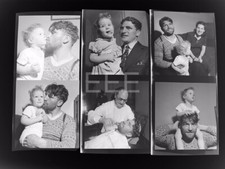
16 1941 Lou Nova Boxer Boxing Cosmic Punch Actor Old famous Photorapher Negative
$14240.06