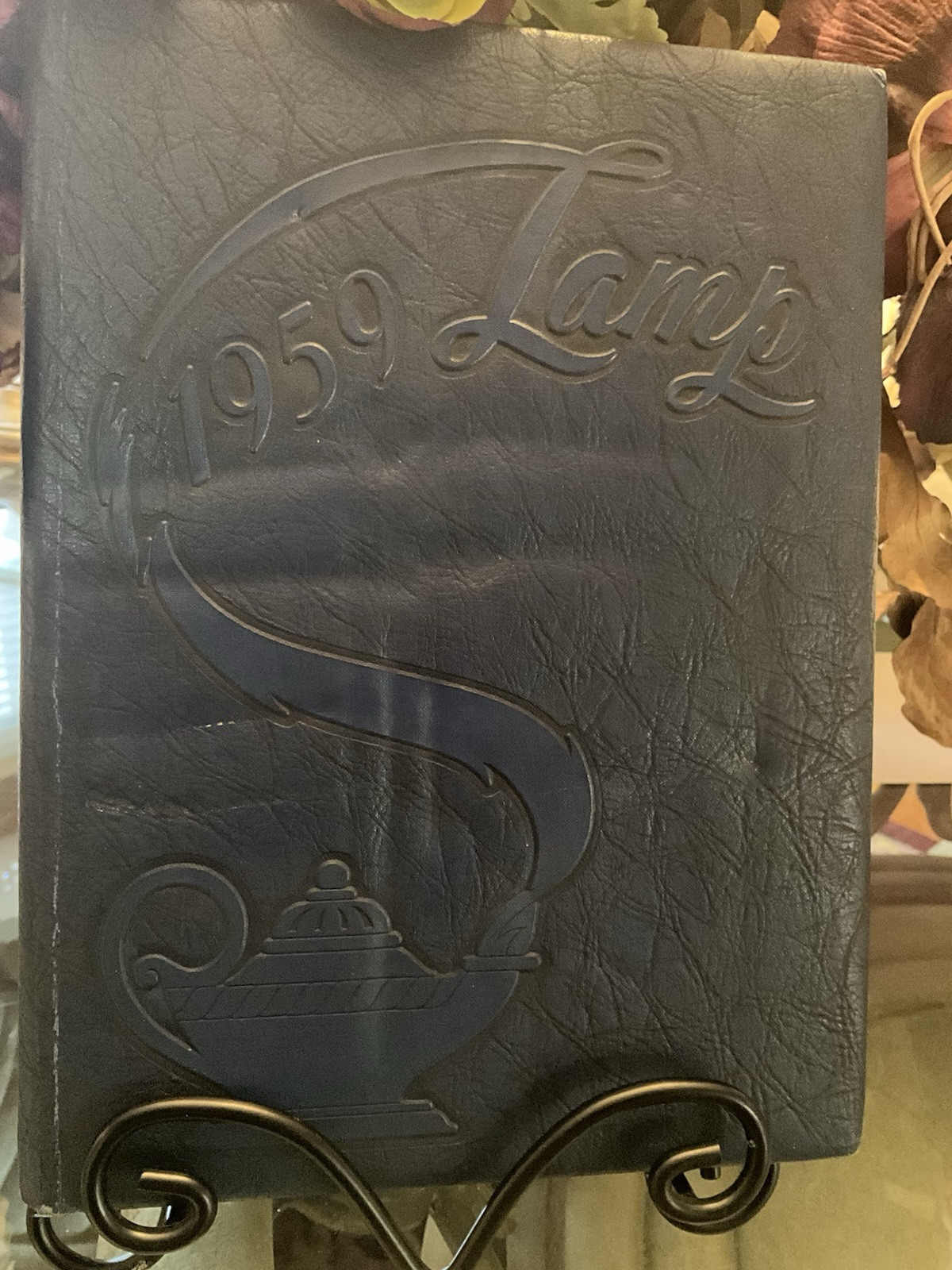
John Lewis *SIGNED* 1959 American Baptist Theological Seminary Yearbook

When you click on links to various merchants on this site and make a purchase, this can result in this site earning a commission. Affiliate programs and affiliations include, but are not limited to, the eBay Partner Network.

John Lewis *SIGNED* 1959 American Baptist Theological Seminary Yearbook:
$749.99
John Robert Lewis (February 21, 1940 – July 17, 2020) was an American civil rights activist and politician who served in the United States House of Representatives for Georgia's 5th congressional district from 1987 until his death in 2020. He participated in the 1960 Nashville sit-ins and the Freedom Rides, was the chairman of the Student Nonviolent Coordinating Committee (SNCC) from 1963 to 1966, and was one of the "Big Six" leaders of groups who organized the 1963 March on Washington. Fulfilling many key roles in the civil rights movement and its actions to end legalized racial segregation in the United States, in 1965 Lewis led the first of three Selma to Montgomery marches across the Edmund Pettus Bridge where, in an incident that became known as bloody Sunday, state troopers and police attacked Lewis and the other marchers.
A member of the Democratic Party, Lewis was first elected to the U.S. House of Representatives in 1986 and served 17 terms. The district he represented included most of Atlanta. Due to his length of service, he became the dean of the Georgia congressional delegation. He was one of the leaders of the Democratic Party in the House, serving from 1991 as a chief deputy whip and from 2003 as a senior chief deputy whip. He received many honorary degrees and awards, including the Presidential Medal of Freedom in 2011.
John Robert Lewis was born near Troy, Alabama, on February 21, 1940, the third of ten children of Willie Mae (née Carter) and Eddie Lewis. His parents were sharecroppers in rural Pike County, Alabama, of which Troy was the county seat. His great-grandfather, Frank Carter, had been born enslaved in the same county in 1862, and lived until Lewis was seven years old.
As a boy, Lewis aspired to be a preacher, and at age five, he preached to his family's chickens on the farm. As a young child, Lewis had little interaction with white people, as his county was majority black by a large percentage and his family worked as farmers. By the time he was six, Lewis had seen only two white people in his life. Lewis recalls "I grew up in rural Alabama, very poor, very few books in our home." He describes his early education at a little school, walking distances from his home. "A beautiful little building, it was a Rosenwald School. It was supported by the community, it was the only school we had. I had a wonderful teacher in elementary school, and she told me 'read my child, read!' And I tried to read everything. I loved books. I remember in 1956, when I was 16 years old, with some of my brothers and sisters and cousins, going down to the public library, trying to get a library card, and we were told the library was for whites only and not for coloreds." As he grew older, he began taking trips into Troy with his family, where he continued to have experiences of racism and segregation. Lewis had relatives who lived in northern cities, and he learned from them that in the North, schools, buses, and businesses were integrated. When Lewis was 11, an uncle took him to Buffalo, New York, where he became acutely aware of the contrast with Troy's segregation.
In 1955, Lewis first heard Martin Luther King Jr. on the radio, and he closely followed King's Montgomery bus boycott later that year. At age 15, Lewis preached his first public sermon. At 17, Lewis met Rosa Parks, notable for her role in the bus boycott, and met King for the first time at the age of 18. In later years, Lewis also credited evangelist Billy Graham, a friend of King's, as someone who "helped change me". Lewis also stated that Graham inspired him "to a significant degree" to fulfill his aspirations of becoming a minister.
After writing to King about being denied admission to Troy University in Alabama, Lewis was invited to meet with him. King, who referred to Lewis as "the boy from Troy", discussed suing the university for discrimination, but he warned Lewis that doing so could endanger his family in Troy. After discussing it with his parents, Lewis decided instead to proceed with his education at a small, historically black college in Tennessee.
Lewis graduated from the American Baptist Theological Seminary in Nashville, Tennessee, and was ordained as a Baptist minister.He then earned a bachelor's degree in religion and philosophy from Fisk University, also a historically black college. He was a member of Phi Beta Sigma fraternity.
This yearbook is from his time at the American Baptist Theological Seminary. It is rare to find items from BEFORE people became famous, o this is a unique opportunity. It contains many pictures of John Lewis before he became an iconic Civil Rights Leader. It is also signed by him (and other classmates). What a RARE piece of history for such a HUGE figure in the Civil Rights Movement! He was a beloved leader, minister, member of U.S. Congress and son of Georgia.
Another Civil Rights Icon: James Luther Bevel (James Bevel is also pictured in this yearbook)
James Luther Bevel (October 19, 1936 – December 19, 2008) was an American minister, leader of the 1960s Civil Rights Movement in the United States, and convicted child molester. As a member of the Southern Christian Leadership Conference (SCLC), and then as its director of direct action and nonviolent education, Bevel initiated, strategized, and developed SCLC's three major successes of the era: the 1963 Birmingham Children's Crusade, the 1965 Selma voting rights movement, and the 1966 Chicago open housing movement. He suggested that SCLC call for and join a March on Washington in 1963 and strategized the 1965 Selma to Montgomery marches which contributed to Congressional passage of the 1965 Voting Rights Act.
Prior to his time with SCLC, Bevel worked in the Nashville Student Movement, which conducted the 1960 Nashville Lunch-Counter Sit-Ins, the 1961 Open Theater Movement, and recruited students to continue the 1961 Freedom Rides after they were attacked. He helped with initiating and directing the 1961 and 1962 voting rights movement in Mississippi. In 1967, Bevel was chairman of the Spring Mobilization Committee to End the War in Vietnam. He initiated the 1967 March on the United Nations as part of the anti-war movement. His last major action was as co-initiator of the 1995 Day of Atonement/Million Man March in Washington, D.C. For his work, Bevel has been called the strategist and architect of the 1960s Civil Rights Movement[11] and, with Dr. King, half of the first-tier team that formulated many of the strategies and actions to gain federal legislation and social changes during the 1960s civil rights era.
Bevel was born in 1936 in Itta Bena, Mississippi, the son of Illie and Dennis Bevel. He was one of 17 children and grew up in rural LeFlore County of the Mississippi Delta and in Cleveland, Ohio. He worked on a cotton plantation for a time as a youth and later in a steel mill. He was educated at segregated local schools in both Mississippi and Cleveland. After high school he served in the U.S. Navy for a time and pursued a career as a singer.
Feeling an inner call to become a minister, he attended the American Baptist Theological Seminary in Nashville, Tennessee from 1957 to 1961 and became a Baptist preacher. He joined the Southern Christian Leadership Conference. While at seminary, Bevel reread Leo Tolstoy's 1894 book The Kingdom of God Is Within You, which had previously inspired his decision to leave the military. Bevel also read several of Mohandas Gandhi's books and newspapers while taking off-campus workshops on Gandhi's philosophy and nonviolent techniques taught by James Lawson of the Southern Christian Leadership Conference. Bevel also attended workshops at the Highlander Folk School taught by its founder, Myles Horton, who emphasized grassroots organizing.
ALL SALES FINAL
Please review the photos and ask questions. Based on the value of the item, it CANNOT be returned for any reason. There is just too much risk shipping such an item back and forth.
Payment for Buy It Now is required immediately and if a Best Offer is negotiated.
I will ship your item insured (at my cost and for your protection) within 1-3 days of receipt of payment. I try hard to ship same day when this much money is involved to give people confidence in their purchase. I have sold high-end items for many years, but have not sold anything in quite some time. Rest assured, I know how to appreciate a Buyer and will work hard to ensure you are pleased.
Thanks for looking at my sale!
John Lewis *SIGNED* 1959 American Baptist Theological Seminary Yearbook:
$749.99
Related Items:
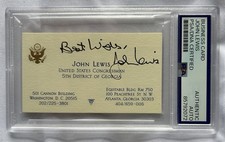
John Lewis Signed United State Congress Business Card VERY RARE PSA/DNA
$4999.99
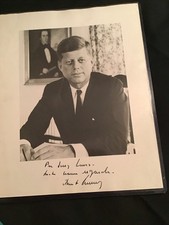
POTUS John F. Kennedy (1917-1963) - Signed Autographed 11X14 To Jerry Lewis. 🔥
$3000.00
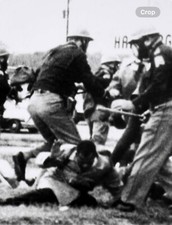
1965 Selma Pettus Bridge Bloody Sunday Photo Taken Moment John Lewis Was Beaten
$1500.00